6 min read - updated November 2026
Brochure folds: tri-fold vs Z-fold and more
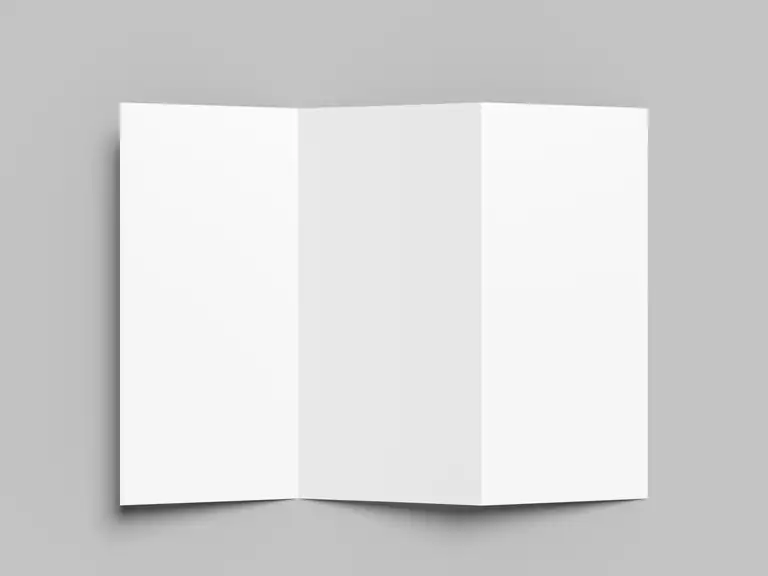
A tri-fold folds a sheet into thirds to make six panels with one panel tucked inside, and a Z-fold zigzags the panels back and forth like an accordion, so it opens flat in one view. A half-fold, or bi-fold, folds the sheet once to make four panels.
- Serving Carmichael since 1965
- Most quotes within one business day
- Mon-Fri 8:00-5:00, one block off Fair Oaks Blvd
Key points
- Bi-fold: one fold, four panels
- Tri-fold: folded in thirds, six panels
- Z-fold: accordion style, six panels that open flat
- The inside flap of a tri-fold is slightly narrower
- Folding varies by about plus or minus 1/16 inch
The fold decides how a reader moves through a brochure. One fold shows a cover and an inside spread, while three panels reveal one at a time. Choosing the fold before you design saves a lot of rework, because each fold needs its panels planned differently.
The common folds compared
Wikipedia describes the bi-fold as one fold making four panels, the tri-fold as folded into thirds for six panels, and the Z-fold as an accordion where panels fold back and forth.
| Fold | Panels | How it opens | Good for |
|---|---|---|---|
| Bi-fold (half) | 4 | Like a book | Programs, menus, simple brochures |
| Tri-fold (letter or C-fold) | 6 | Flap opens, then the spread | Service brochures, mailers |
| Z-fold (accordion) | 6 | Zigzag, opens all at once | Step-by-step content, maps |
Panel sizes for a letter-size tri-fold
A letter sheet turned sideways is 11 inches wide, and divided in three the panels would each be about 3.67 inches. In practice, the panel that folds inside is made a little narrower than the others so it tucks without bulging. A common setup makes the tucked panel about 1/16 to 1/8 inch narrower, for example 3 11/16, 3 11/16 and 3 5/8 inches across a letter sheet. Ask us for the widths for your fold, and set your guides before placing text.
Planning the content
- Tri-fold: the front panel is the cover, the inside flap is what the reader sees first when opening, so put the hook there
- Z-fold: every panel is seen in sequence, so number steps or tell a story left to right
- Bi-fold: the inside spread is one big area for a photo or a map
- Put the contact panel where it does not get hidden when displayed in a rack
Folding and ink
Paper is made of fiber, so ink can crack along a fold. This is unavoidable, so avoid heavy solid ink right on the fold line, and keep text and faces away from it. The folding machine can vary by plus or minus 1/16 inch, so do not run a thin line or border along the crease. See folding and scoring, which helps heavier paper fold cleanly.
Mailing a folded piece
A folded brochure that is mailed needs to meet mailpiece size limits, and a letter-size sheet folded in thirds is small enough to fit many mailing formats. Check the rules in letter vs flat mail sizes before you finalize.
Other folds you may see
A gate fold has two outer panels that fold in to meet at the center, like a pair of doors, and it makes a dramatic opening for a menu or an invitation. A roll fold, also called a letter fold with extra panels, tucks each panel inside the next. A double parallel fold produces eight panels from one sheet.
Each of these needs its own layout, and the more folds there are, the more precisely panel widths matter. Show us a sample of the fold you like, or describe the opening you want, and we will tell you how it can be made.
Choosing between tri-fold and Z-fold
If the story has a cover and an inside surprise, choose the tri-fold. If it is a sequence, like steps or a timeline, choose the Z-fold, because the reader sees it laid out in one view. When in doubt, sketch both on scrap paper and see which reads better.
Checking a folded dummy
Before you finalize, print the layout on plain paper, fold it, and look at it as a reader would. The order of panels, and what shows when the brochure is first opened, are far easier to judge in your hands than on a screen.
Sources (2)
- Wikipedia: en.wikipedia.org/wiki/Brochure (checked November 2026)
- Wikipedia: en.wikipedia.org/wiki/Paper_size (checked November 2026)
Which fold is the most common?
The tri-fold on a letter-size sheet is the classic brochure format.
Does a Z-fold need different artwork?
Yes. Panels are read in sequence and the fold lines fall in different places, so lay out the six panels before you design.
Can you fold for me?
Yes. Folding is one of Carmichael Printing's bindery services.
Start a job
Tell us about your print job.
Send what you know: the piece, the quantity, your file if you have one. Just tell Tony what you need.
(916) 487-8679Monday to Friday, 8:00 am to 5:00 pm. Or stop by 5757 Robertson Ave, Ste A, one block off Fair Oaks Blvd.
- Serving Carmichael since 1965
- Most quotes within one business day
- Mon-Fri 8:00-5:00, one block off Fair Oaks Blvd